
 , Sharp User Team
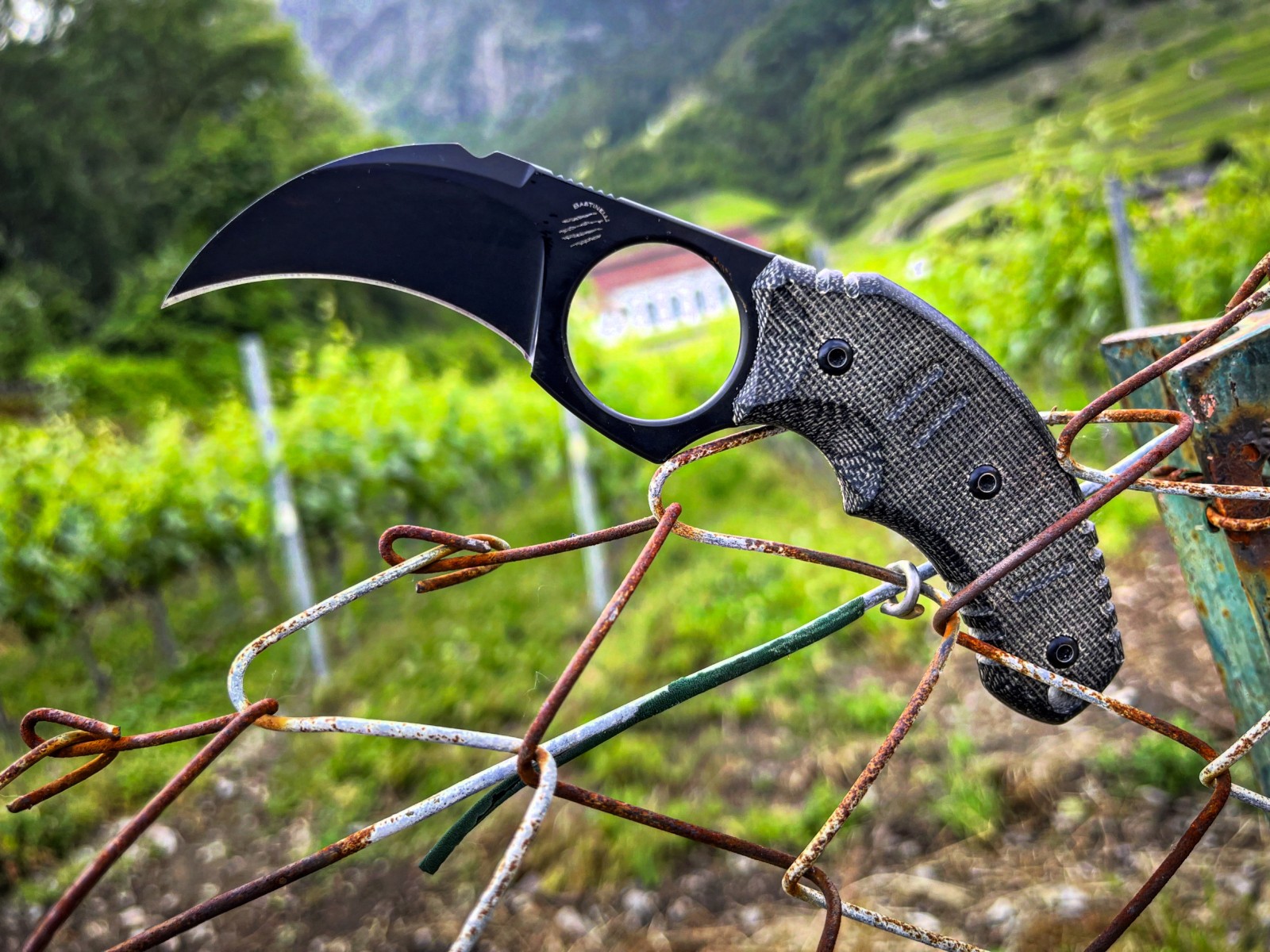

Small Size, Big Personality: Bastinelli Meets Fred Perrin
A 5-cm M390 blade, a Micarta handle, and an iconic shape: the Bastinelli Ligament clearly isn’t trying to go unnoticed.
The result of a collaboration between Bastinelli Knives and Fred Perrin, this small fixed-blade knife has a personality all its own. Let’s take a closer look at what lies behind this unusual silhouette.
Some knives aim to appeal through their versatility; others through their simplicity.
And then there are those that fully embrace their uniqueness. The Bastinelli Ligament clearly belongs to this last category.
The handle plays a significant role in the overall design, while the blade is intentionally compact and features a hawkbill shape, designed to provide enhanced cutting ability.
This design choice immediately sets it apart from a small utility fixed-blade knife. The Ligament is clearly geared toward self-defense.
Therefore, one shouldn’t expect it to have all the capabilities of a traditional utility knife, although it can be formidable for cutting cardboard and rope.
Its integrated ring is an interesting feature that contributes to its grip and identity.
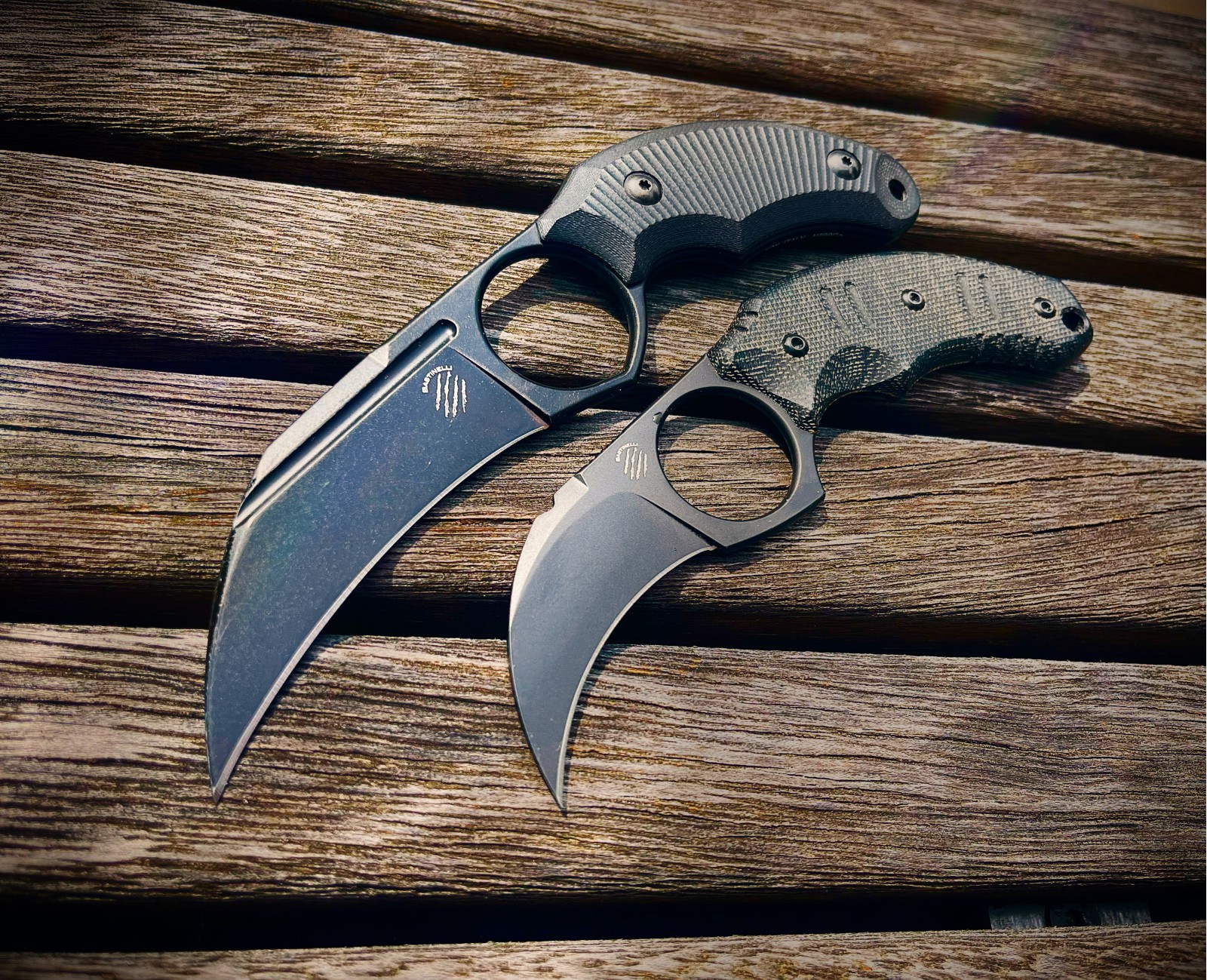
The Ligament and its big brother, the Harpy.
The Ligament features a blade made of Böhler M390 steel, a powder-metallurgy stainless steel particularly prized in high-end cutlery.
Its composition, rich in chromium, vanadium, and molybdenum, gives it excellent wear resistance, good edge retention, and high corrosion resistance.
The choice of this steel is consistent with the commitment to quality shared by Bastinelli and the Ligament.
The blade features a black PVD coating that enhances its understated and discreet appearance.
This finish helps protect the surface from certain forms of wear and tear while adding undeniable aesthetic appeal.
The handle is made of Micarta, a composite material particularly prized for its stability, durability, and distinctive feel. It offers an attractive alternative to metal handles, conventional polymers, or G10. On this model, it is available in two colors: black or green.
A good material does not automatically guarantee a comfortable handle. The hand remains the best gauge.
This small fixed-blade knife is constructed using the “on-the-spine” method.
This construction method involves extending the blade into the handle (see photo).
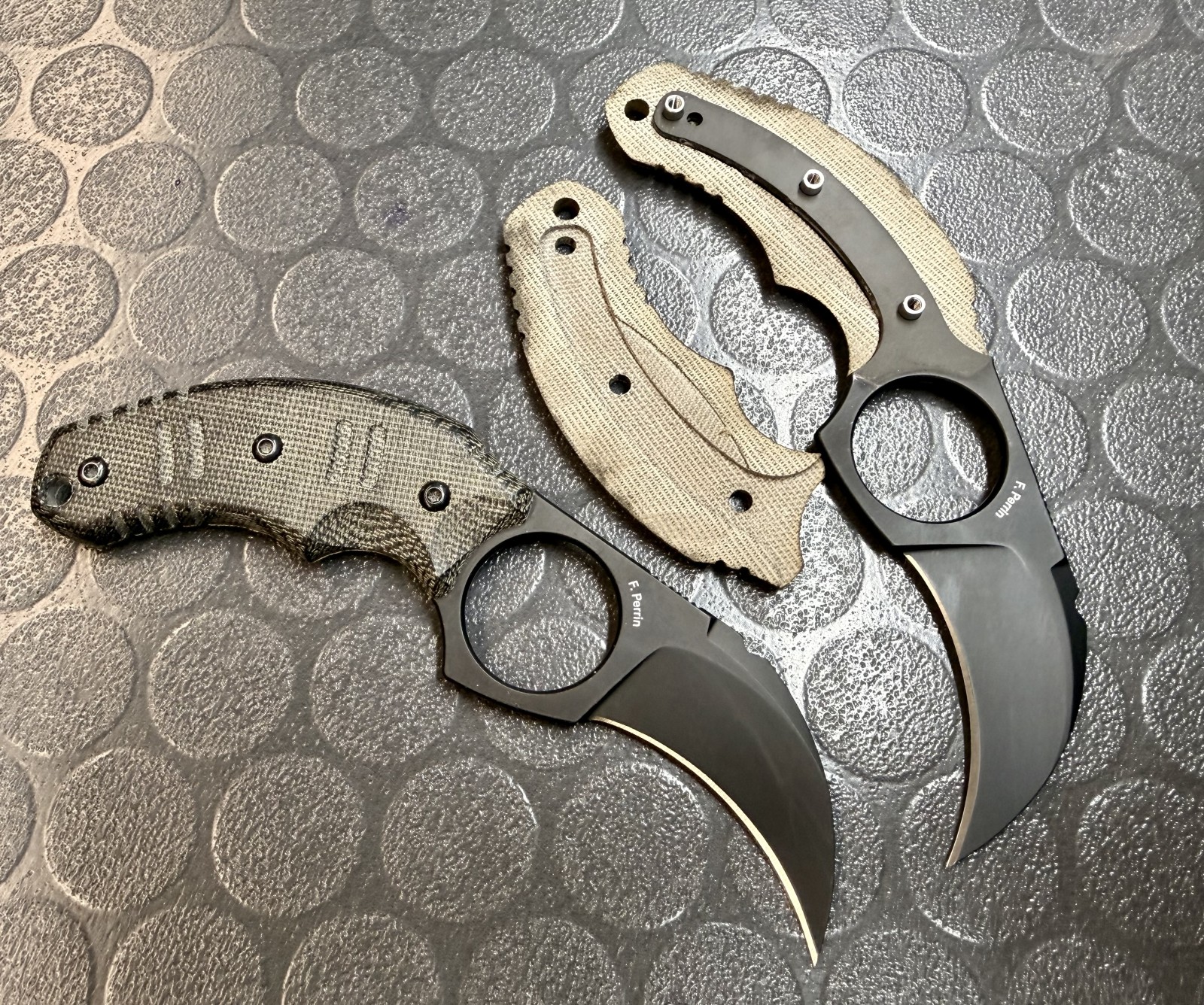
This steel section, called the “tang,” securely connects the blade to the handle and ensures the knife’s overall strength.
The distinctive ring on Fred Perrin’s “claw” is not merely aesthetic: it influences the handle’s design and the way the knife feels in the hand.
However, this design must be evaluated based on the user’s hand morphology.
Hand size, finger shape, gripping habits, and especially finger diameter can significantly affect comfort.
The Ligament comes with a high-quality Kydex sheath, a recurring feature in Bastinelli’s lineup.
It allows for several carrying options: around the neck (neck carry), tucked into pants using the included clip, or in a pocket.
One thing is certain: thanks to its compact size, you’ll hardly notice this small fixed-blade knife in your daily life.
At Tellknives, the Ligament is priced at approximately 294 CHF (including tax) in its black version.
This price clearly places the Ligament in the premium segment of small fixed-blade knives.
The choice of M390 steel, the full-tang construction, the Micarta handle, and the collaboration between Bastinelli and Fred Perrin are compelling reasons for its positioning.
The Ligament is therefore aimed more at enthusiasts who appreciate design, collaborations, and materials than at those simply looking for the best balance between blade length and price.
And that’s not necessarily a flaw: not all knives are meant to be universal tools.
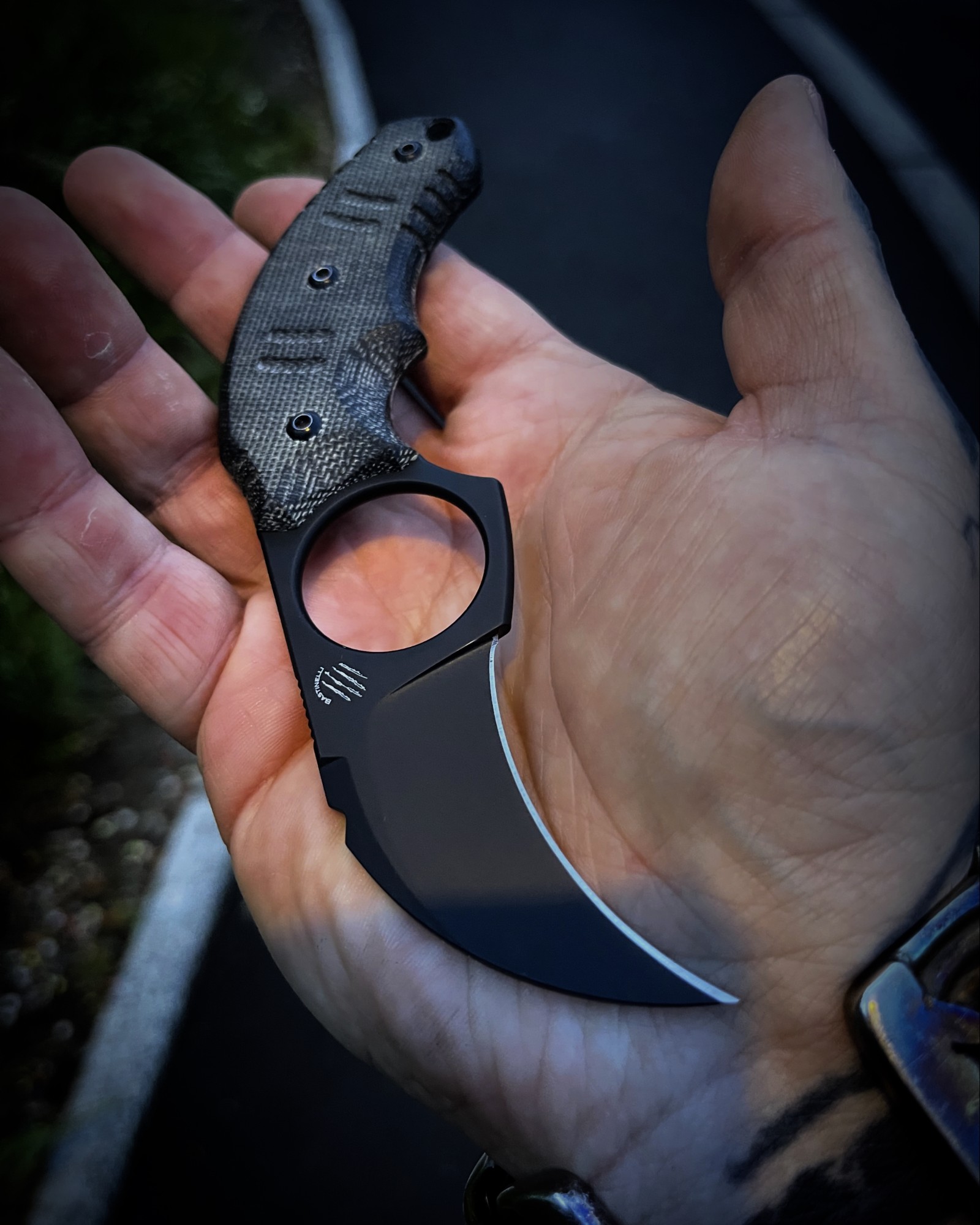
Personally, the Bastinelli Ligament particularly appealed to me because of its unique character. I appreciate this willingness to think outside the box, with a bold design, high-end M390 steel, a Micarta handle, and a silhouette that certainly doesn’t go unnoticed.
Admittedly, its atypical blade profile gives it a specific purpose, and its price places it in the high-end category.
But I see these characteristics more as the result of a deliberate design choice than as actual flaws.
Ultimately, for me, the Ligament is much more than just a compact, incredibly effective, and discreet knife for everyday carry
A knife that doesn’t try to look like other fixed-blade knives of similar size—and which, in my view, has absolutely no need to do so.
Dane