
 , Sharp User Team
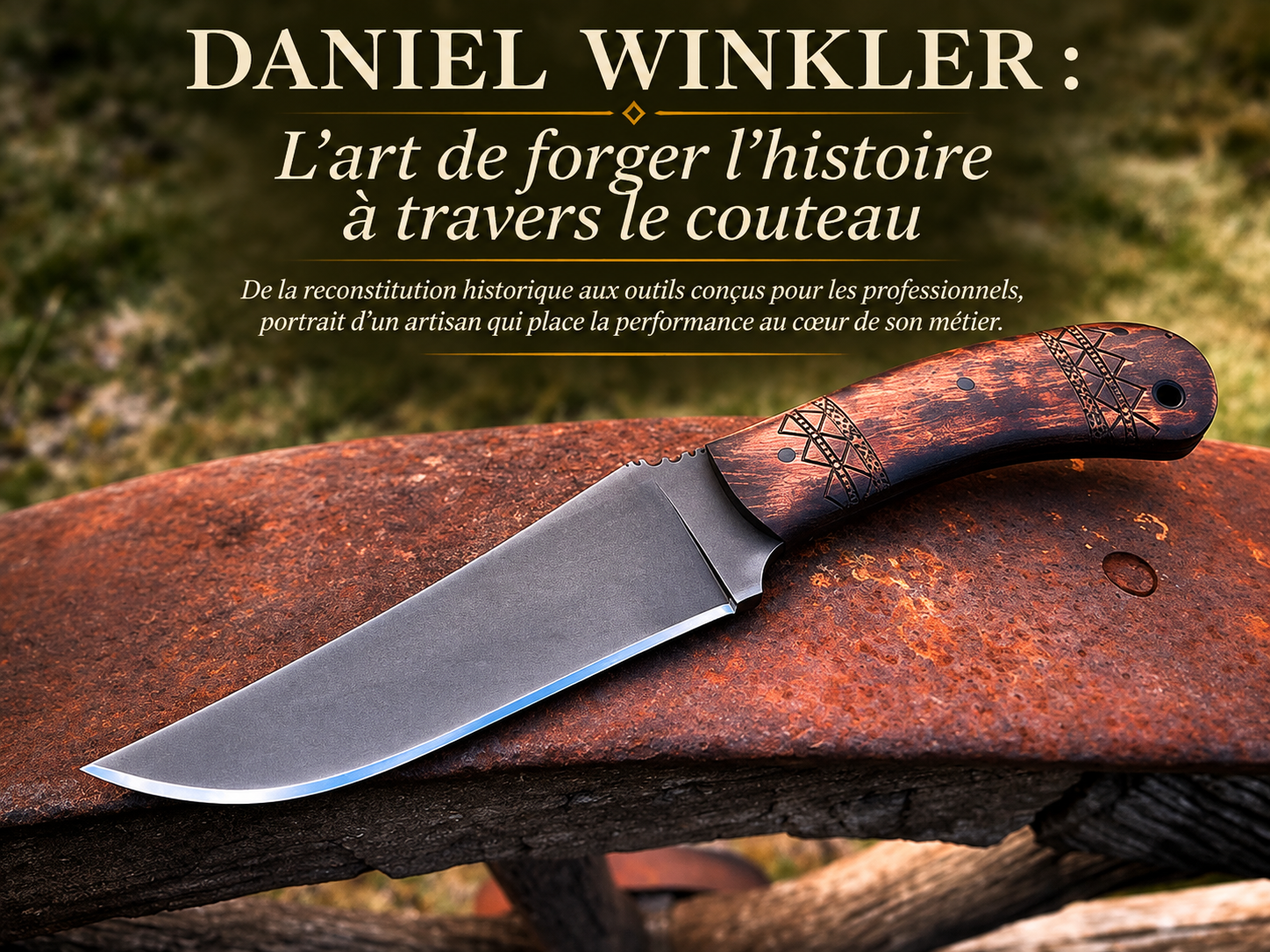


Daniel Winkler: The Story of a Craftsman Balancing Heritage and Excellence
Since childhood, Daniel Winkler has been fascinated by colonial America. This interest in history led him to become involved in historical reenactment, a passion that gradually drew him toward cutlery, until it became his profession.
In 1975, he forged his first knife to complete his 18th-century lumberjack outfit. The experience was a turning point: upon finishing this first creation, he realized he had just discovered his true calling.
In 1984, he sold his first knife. Initially intended to fund his historical reenactment expeditions, this endeavor quickly took on a new dimension. Demand for his creations grew, leading him to participate in craft fairs and exhibit his pieces at the BLADE Show in Knoxville in 1987.
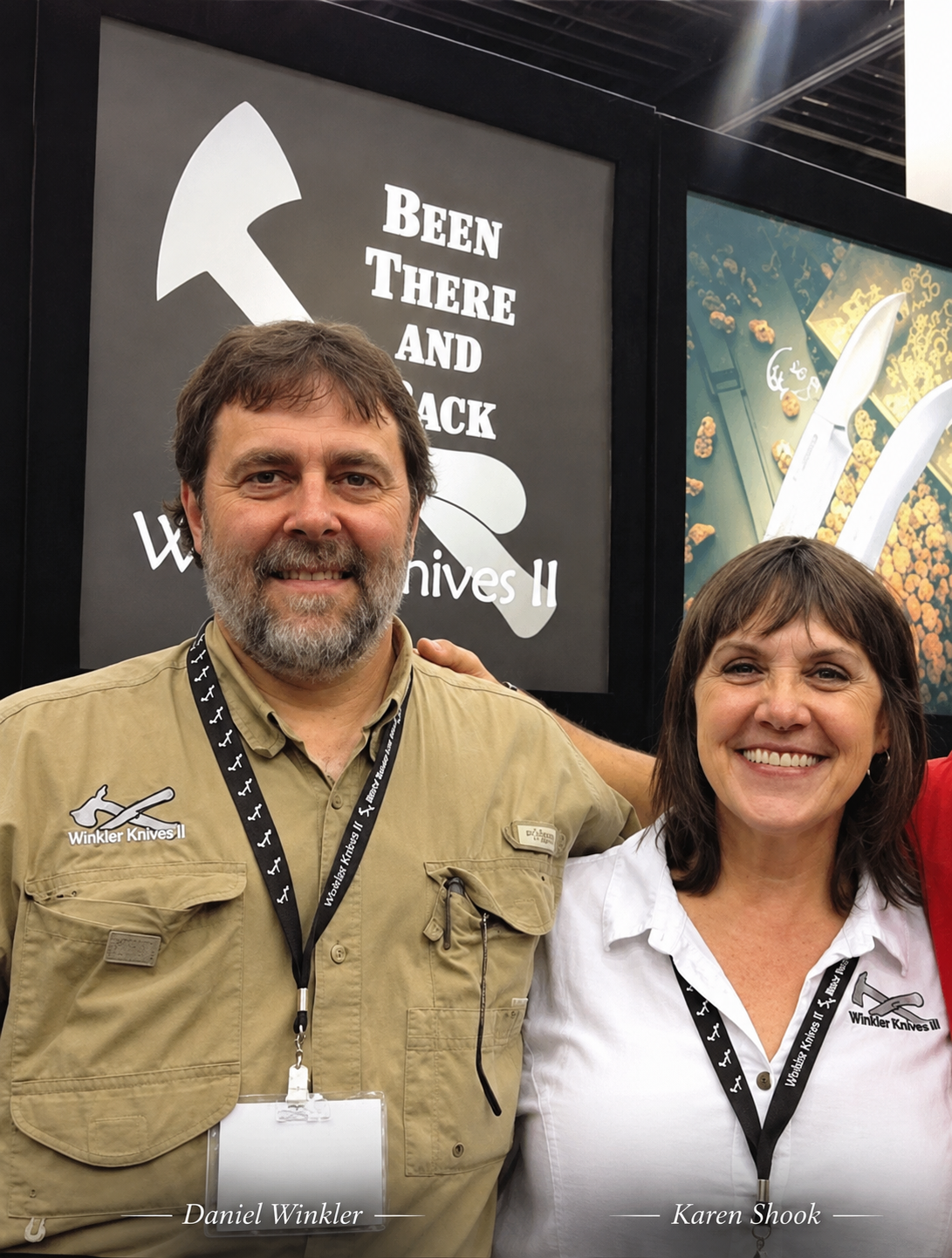
At the same time, he worked as a research and development technician. Since 1985, Karen Shook has been crafting the sheaths for his knives. Their collaboration proved particularly fruitful, and in March 1988, they decided to devote themselves fully to custom knife-making.
From the very beginning, Winkler stood out for his unique aesthetic style. His black blades—sometimes mistakenly interpreted as a flaw in the finish—actually reflect his commitment to the history and traditions of cutlery. This artistic choice quickly won over collectors around the world.
His unique approach to cutlery also opened doors for him in the film industry. In 1992, Daniel Winkler helped craft the bladed weapons for the film *The Last of the Mohicans*. Notably, he created the knives for Hawkeye and Uncas, as well as Magua’s tomahawk.
This collaboration helped bring his work to the attention of a wider audience, while demonstrating his ability to apply his artisanal expertise in contexts where history and functionality take center stage.
In 1993, he was awarded the title of Master Bladesmith by the American Bladesmith Society. This recognition marked an important milestone in his career and accompanied his transition to forging high-performance patterned steels.
Over the years, Daniel Winkler has received numerous awards and has seen his work featured in various media outlets. His approach, at the intersection of historical heritage and technical precision, helps shape the identity of his creations.
Today, Daniel Winkler and Karen Shook no longer accept custom orders. However, they continue to occasionally create pieces for auctions or raffles.
For him, a knife is not merely an aesthetic object. It is, above all, a tool, whose beauty must stem from its function.
This philosophy captures the essence of his work: designing pieces in which technical precision and aesthetic pursuit are never at odds, but rather complement one another.
Dane Bender