 , Sharp User Team
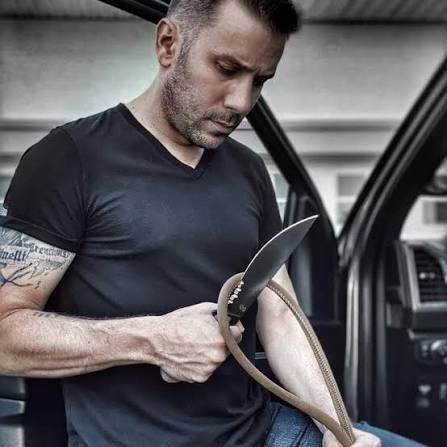
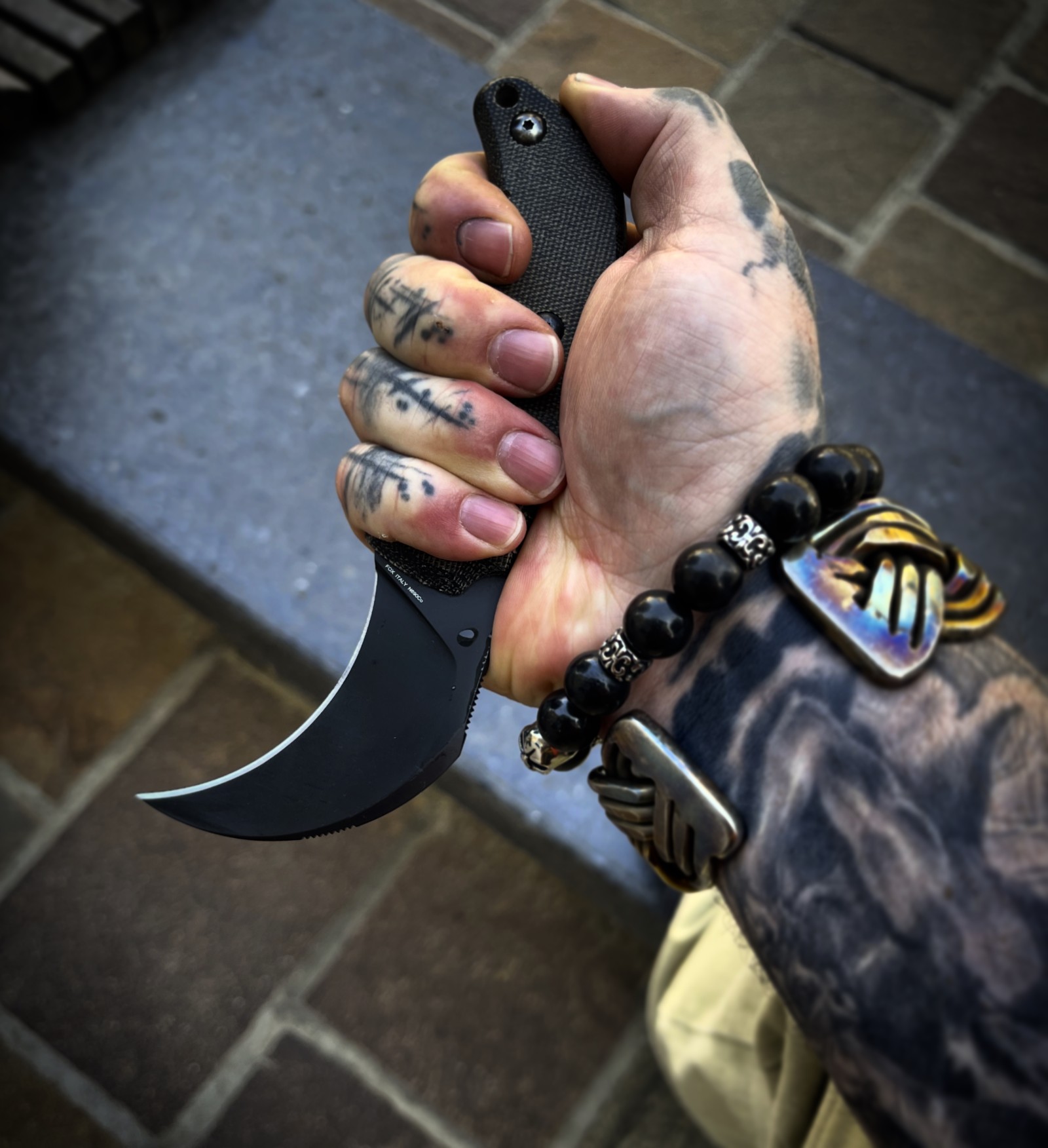
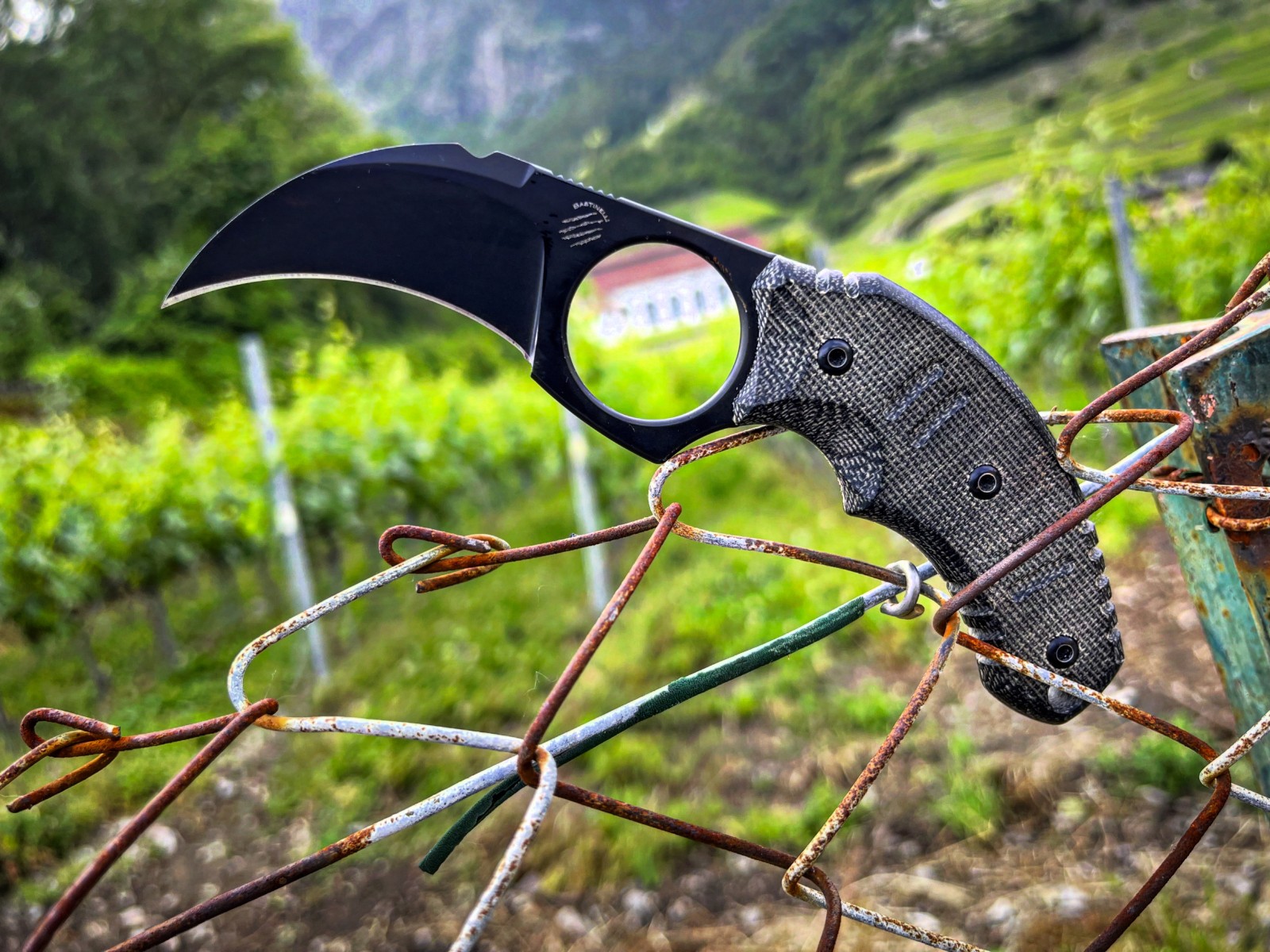
Some knives stand out for their silhouette, others for their design or effectiveness. At Bastinelli Knives, these different aspects come together in an instantly recognizable aesthetic.
Founded by Bastien Coves, the French brand has gradually carved out a niche for itself in the world of tactical and survival knives. This niche is built around a personal approach to knife design, where aesthetics play a particularly important role, without ever losing sight of the practical constraints of the knife’s intended use.
Bastien’s background plays a key role in this. Coming from a family deeply connected to law enforcement and specialized units, he grew up in an environment where equipment—its reliability and suitability for the field—were not merely theoretical considerations. In addition to this close connection to the operational world, he received training in the fine arts, which gave him a deep appreciation for drawing and creativity.
From this dual influence emerged a unique approach to blade design: starting with an idea, giving it a strong visual identity, and then refining its proportions, ergonomics, and characteristics to create a cohesive object.
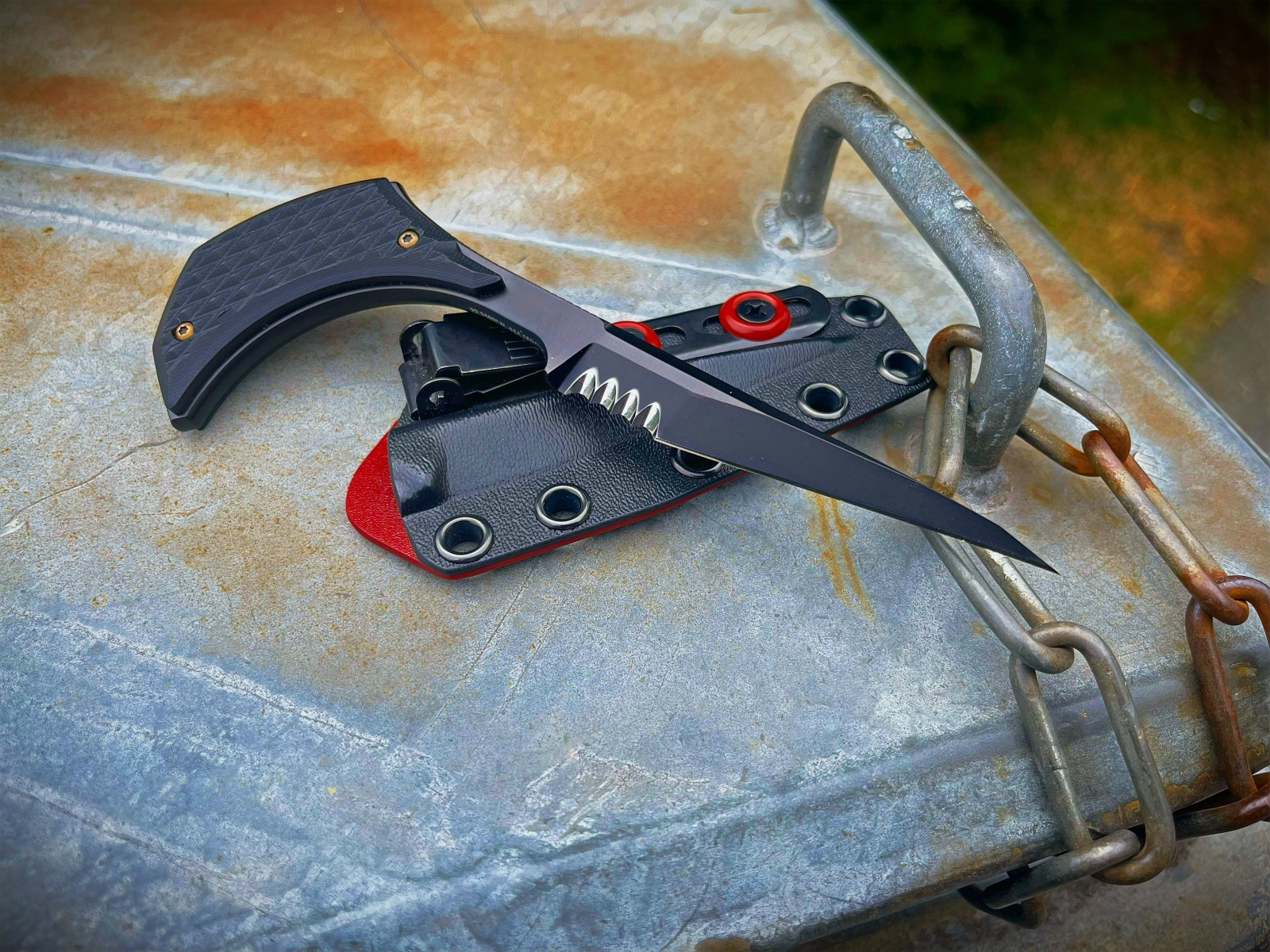
Bastinelli’s creations are distinguished by bold, sometimes daring lines that deliberately break away from the traditional conventions of cutlery. Some draw on classic inspirations, while others explore more unconventional forms. But all embody a commitment to not simply replicating what already exists.
Aesthetics, however, are never an end in themselves. Ergonomics, comfort when carried, the choice of materials, the quality of the finishes, and cutting performance are all integral parts of the design process. This focus on practical use is particularly important for knives intended for everyday carry, where comfort and discretion are often just as crucial as the blade’s performance.
Bastien thus develops his creations through several approaches. In addition to models produced industrially in collaboration with partners such as Fox, Lionsteel, and Viper, he creates custom pieces, semi-custom items, and projects carried out in collaboration with renowned figures in the field, including Doug Marcaida, Fred Mastro, and Fred Perrin.
These collaborations, like his personal creations, allow him to explore different worlds and test his ideas against a variety of experiences and expertise.
Beyond a simple collection of knives, Bastinelli Knives has thus developed a true identity—a blend of practical experience, aesthetic exploration, and creative freedom—that appeals to professionals, collectors, and enthusiasts alike who appreciate cutlery with character.
INTERVIEW WITH BASTIEN COVES
Background and Influences
D.B.: What has been your journey and what inspired you to become a renowned cutler in the field of tactical and survival knives?
I grew up in a family where everyone was involved in law enforcement—my father, my brother, and my grandfather. They worked in various settings, including the Anti-Crime Brigade and other prestigious units.
I almost became one myself! After passing the entrance exams, I turned down the offer. I felt that my path lay elsewhere.
But that close connection to the realities on the ground got me thinking… I wanted to be able to design functional blades that also met certain specific characteristics—sometimes small in size or tailored to the specific needs of France or the unit in question.
Speaking of Tracé, you also attended the Beaux-Arts, right?
Yes, that’s right. It gave me a solid foundation in drawing techniques, which form the conceptual basis for all my work.
Design and Manufacturing
D.B: Can you tell us about the design and manufacturing process for your knives?
When it comes to the manufacturing process, it always starts with the drawing!
Ideas—whether good or not so great—first appear on paper. That’s my process; it’s my therapy!
If the sketch is promising, I move straight on to making a steel prototype. If the prototype is good enough and the project has the potential to be interesting, I send it to Italian manufacturers, who create 3D prototypes and Live Blade models for me.
D.B: It must be hard to stand out in this industry?
We all work with the same materials in the cutlery industry. We all try to create our own recipe and develop our own unique style—that distinctive touch that people can recognize.
That’s been my challenge for quite some time, too: trying to create something—pieces in which people can recognize my work. To stand out with certain lines and designs that come from me, from my workshop, from my lab! I also love the idea of making things my own through very personal details.
And so, to avoid having something that looks like what everyone else is doing.
D.B: What are the influences and sources of inspiration behind the unique designs of your knives, and how do you manage to combine aesthetics and functionality?
There’s always inspiration that can come from other creations—it’s inevitable—but the idea is to move away from them. And if I can’t distance myself from them enough, I discuss it with the creator to reach an agreement, or consider collaborating with the person behind the design. I also like to draw inspiration from vintage items.
But generally, I always try to move away from familiar things and do things differently.
My mentors, Christian Moretti and François Bignon, gave me a solid foundation of knowledge and guidance. My encounters with Fred Perrin and Michael Janich have also influenced me greatly. Then there’s my personal collection of Spyderco, Cold Steel, Blackhawk, and Microtech knives… The people I’ve met in the survival and resilience communities have also helped shape some of my designs.
Generally speaking—and especially when it comes to knives designed for an urban environment—ergonomics and the ability to carry a knife comfortably are very important.
Perhaps we need to be realistic: we spend more time carrying our knife than using it. So it needs to be comfortable and easy to forget you’re even wearing it. This is also because I come from a country where almost everything is illegal.
Some of my blades are purely for self-defense, and some are purely utilitarian. Sometimes, they combine both.
I’ve made knives that are truly designed for self-defense. They’re only good for cutting meat…
You can, of course, use them to open packages or the like, but you’ll very quickly find yourself limited in everyday use.
It’s not a knife you’d use to make toast or pick at food on a plate at a restaurant.
On the other hand, there are blades that are straighter, less curved, and less twisted, which will make them more of a utility tool than a defensive blade.
But let’s be clear: if tomorrow you need to slash some bastard who’s threatening your life on the street or protect someone in trouble, you can do a great job with this blade, too.
I also really like combining the two—a bit of aggression and bite with a bit of practicality. These latest designs are generally quite successful.
D.B.: You collaborate with a wide variety of people. What does that bring to the Bastinelli brand?
It pushes me out of my comfort zone!
Whether it’s with martial arts professionals, experts in survival or resilience, professionals in special operations units from different countries, or even through the collaborations I’ve had in film—with the many movies we’ve been lucky enough to appear in.
All these very different projects have always brought me a dose of the unknown. These experiences push me to step outside my comfort zone, which is both stimulating and very rewarding. Every challenge I face is an opportunity to learn and discover new perspectives.
For most of my collaborations, people reach out to me to create a custom knife.
They may also ask me to design a model exclusively for them, to add their logo to one of my blades, or to create a special edition with specific features, such as a double-edged blade or a handle in a specific color.
Very often, the instructions I receive boil down to just a few ideas—sometimes only two or three words.
Occasionally, clients provide more details, which makes the process easier.
That’s when my imagination and experience come into play to bring their project to life.
D.B.: Are there any encounters that have left a lasting impression on you?
I loved working with Pierre Henri Monnet and Fred Perrin in France. It was fascinating to work with, listen to, and—above all—learn from François Bignon and master blacksmith Christian Moretti, who is my first mentor.
He taught me everything about blacksmithing and enriched my knowledge in many areas.
I’ve learned a lot from Anthony Marfione (Microtech) recently, because his approach to work, his organizational skills, and the way he practices his craft—both as a knife maker and as a businessman—are remarkable and very inspiring.
D.B: What are your future plans and goals as a knife maker and owner of Bastinelli Knives?
I’d always like to be able to express myself through my designs.
If all goes well, I hope to expand my projects—particularly in the film industry—and establish new collaborations.
I’m open to working with anyone who’s interested, whether they’re professionals from various sectors or even people with no direct connection to the cutlery industry.
One idea I’m considering is forming a small group to develop new projects together. However, my priority remains to continue my current work, to stay true to myself, and to keep my feet on the ground.
D.B. Can you tell us about Full Custom and Semi Custom?
We have three ways of working: Full Custom, Semi Custom, and mass-produced.
Full Custom
When I talk about Full Custom, we start with a sketch I draw in the workshop. I then trace it onto a steel bar, which I cut with a band saw. I then shape the entire piece on the backstand before performing the grinding.
While the heat treatment is underway, I handle the preparation and construction of the handles, whether they’re made of composite materials or braided.
I also perform the heat treatment here, using the workshop’s furnace. Next, I tackle the finishing touches on the entire piece, including the sheaths, sharpening, and engravings.
For a Full Custom, everything is therefore done from start to finish right here in the workshop!
The Semi-Custom
For the Semi-Custom, I start with blades from industrial production that we have in the workshop, and then I add my personal touch.
We can make specific modifications, apply special sharpening techniques, change the colors, rework the handle’s design, or even offer new finishes.
It’s a blend of custom and industrial—a way to personalize existing models by giving them their own unique identity.
Industrial
Finally, there’s the “Full Industrial” line. In this case, the knives are entirely manufactured by companies like Fox, Lionsteel, or other manufacturers we work with.
D.B.: Would you like to tell us about some of your more unconventional designs?
There are also designs I’ve created that are purely exotic, like the Reaper.
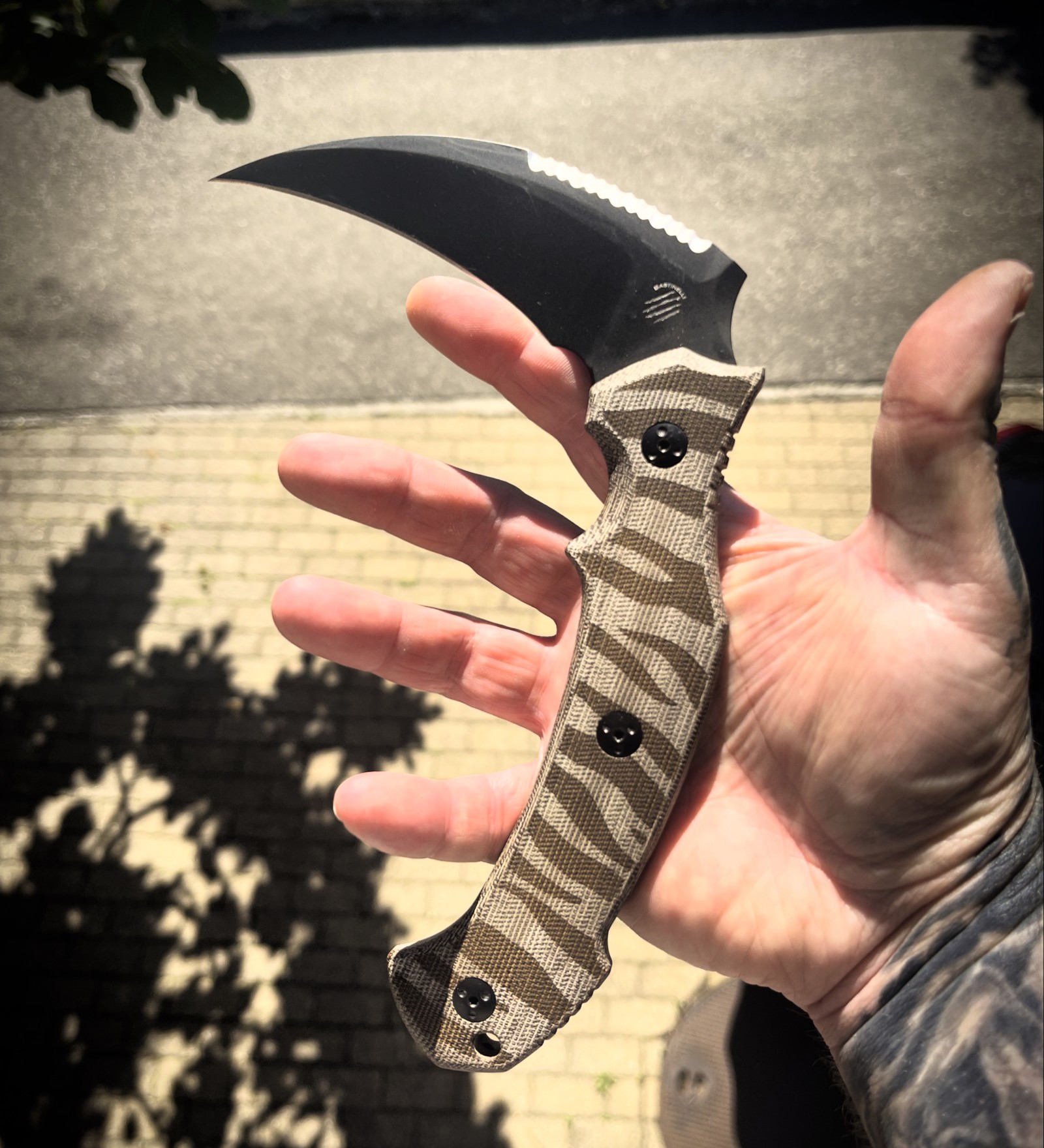
It’s a rather unique tool, quite playful in its design, but above all very unconventional. It’s the kind of piece you’ll set on a table that will immediately catch the eye. People will wonder about it, wanting to understand why it has this shape, how it was conceived, and where its inspiration comes from.
Some of these designs are inspired in particular by the scythe or the ripper. There are several possible influences and approaches to these shapes, but their primary purpose remains to be exotic.
I’m fully aware that these aren’t necessarily tools you’d use on a daily basis. They aren’t the first choice for a soldier—or even a civilian—for conventional use. And let’s not even get into zombie scenarios!
But sometimes, I need to escape through these kinds of designs. It allows me to explore other creative avenues, to think outside the box, and then to return to designs that are more serious, more authentic, and more accessible to everyone.
-------
As our conversation unfolds, it quickly becomes clear that, for Bastien Coves, a knife is never just a tool. It’s first and foremost an idea, a desire to create, and his very own way of expressing his vision of cutlery.
His journey—blending hands-on experience, artisanal craftsmanship, and artistic sensibility—has naturally shaped his approach. For him, it all begins with a sketch. Next come the shapes, proportions, ergonomics, and all those little details that ultimately give a blade its identity.
Bastien doesn’t seek to do what everyone else does. He loves to explore, experiment, think outside the box, and sometimes venture into more unexpected directions. His collaborations and the diversity of his creations reflect this constant curiosity and his desire to never limit himself to a single way of designing a knife.
Ultimately, this is what makes Bastinelli Knives so interesting: this ability to shift from a knife designed for a specific purpose to a more unconventional—sometimes even surprising—creation, all while maintaining a genuine aesthetic coherence.
Behind the sometimes radical lines and designs that leave no one indifferent, we discover above all an enthusiast who loves to sketch, explore, experiment, and challenge his own ideas.
And that’s probably where Bastien’s strength lies: not settling for replicating a formula that works, but continuing to seek out his own. With character, personality, and, above all, the desire to find joy in creating.