
 , Sharp User Team
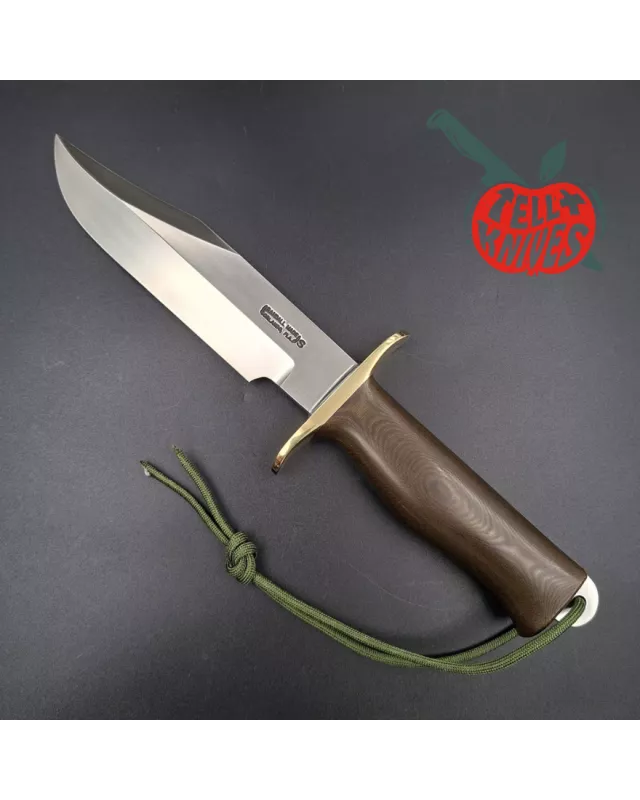

There are knives I admire, ones I love to collect, and ones whose history fascinates me. And then there are those I pick up and say to myself, “There it is. That’s exactly it.” The Randall Buxton Fighter belongs to that last category.
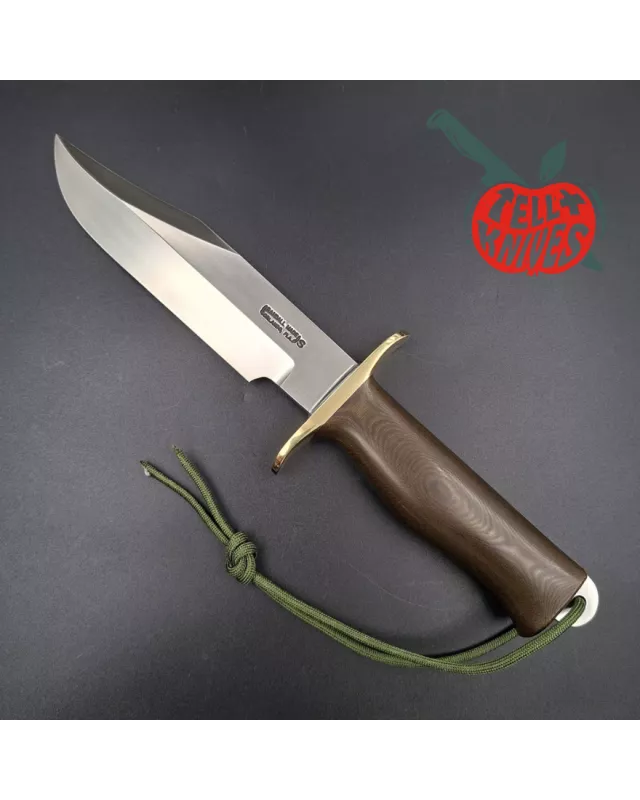
I could start with its rarity, its serial number, or its status as a Dealer Special. All these factors are important, and I’ll come back to them. But that would be putting the cart before the horse. What appeals to me most about the Buxton is the knife itself—its presence, its balance, and the very special way it fills the hand and instantly inspires confidence.
I might as well say it right away: if I had to own just one Randall, it’s very likely I’d choose a Buxton Fighter. And yet, there’s no shortage of contenders!
To understand this knife, a few words about its origins are helpful. Wayne Buxton had been a Randall dealer since the early 1970s. The model that bears his name belongs to the “Dealer Specials” family—creations developed by the manufacturer for select distributors. The first public releases of the Buxton Fighter date back to February 1994.
Its kinship with the Model 14 Attack is very real. It retains the latter’s solid construction, with a stainless steel blade shortened to 6.5 inches—or about 16.5 cm—and features a more pronounced Bowie profile. It also features a tang extension that protrudes from the back of the handle—a design element already present on the earliest Model 14s before being omitted from their standard configuration.
The result has a very strong identity. It’s a sort of more compact, more stocky Model 14, with that extra touch of character that completely changes the knife’s appeal. In my view, it’s also more feral, more raw in its expression than the Model 1s. The Model 1s often have a slender elegance; the Buxton has a dense, resolute quality. Even when tucked away in its sheath, it doesn’t try to blend into the background.
And when you pick it up, that impression is confirmed.
“Over my dead body.” That’s probably the phrase that best captures how I feel when I wrap my fingers around its handle. It settles into the palm with a delightfully natural ease. On this Border Patrol configuration, no specific pattern of finger indentations dictates exactly where each finger should go: the curve of the Micarta, the widened sections of the handle, and the guard combine to create a grip that I find extraordinarily satisfying.
I love the feeling of holding the knife fully. The handle feels neither too narrow nor unnecessarily bulky. It fulfills its purpose with a simplicity that almost makes you forget the work required to achieve such a perfect shape.
But perhaps the most remarkable feature is the balance.
When I hold it, the weight is concentrated around my index and middle fingers. The Buxton has some heft to it—there’s no denying that—but it doesn’t feel like that weight is weighing down on the end of my arm. The blade doesn’t pull excessively forward, and the handle doesn’t seem to want to tip backward. The whole knife stays centered where the hand controls it.
That’s what makes this knife so appealing to me: it has a strong presence, but it remains well-controlled. You might appreciate a large knife for its dramatic appearance; here, I especially appreciate the way its proportions work together.
The construction plays a major role in this sense of confidence. The full tang remains visible on the back of the handle, runs through the Micarta block, and extends to the rear. I like being able to visually follow this continuity of metal. The handle is carved from a single block, giving the impression of material enveloping a particularly substantial structure.
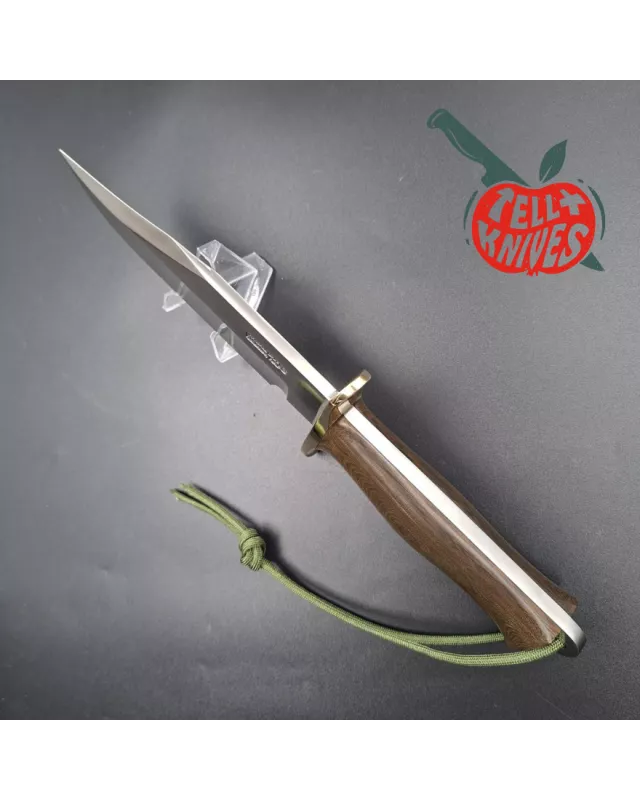
The word that comes to mind is “unbreakable.” I’m talking about a sensation: on the scale of human strength and manual use, I find it hard to imagine breaking such a well-made knife. This isn’t a report on a destructive test, but an expression of the confidence it inspires in me. And that confidence also contributes directly to the pleasure I get from handling it.
The blade, for its part, combines everything I love about a compact Bowie knife: an expressive tip, a well-defined cutting edge curve, and a sharp back edge that gives the upper section its distinctive character. The silhouette remains instantly recognizable. There’s no need to pile on details to achieve such a distinctive knife.
On the BF-1187 featured here, the double curved brass guard (a classic feature of the Model 1) adds an extra touch of warmth to the overall design. It complements the brown and khaki tones of the Micarta, which is officially designated as green. This, in fact, is one of those little material surprises I appreciate: a name offers a clue, but the knife before you has its own unique nuances.
The satin-finished blade, the polished brass, the Micarta’s grain, and the brown leather sheath come together in a particularly harmonious combination. The Buxton’s military character is undeniable, but its presentation also invites you to linger over the details.
This particular knife has a small indentation at the base of the handle, which is noted and photographed in its listing. I’d like to reiterate: even when I like a model this much, each piece deserves to be presented exactly as it is. This irregularity is a factor in evaluating the BF-1187 and its price; it doesn’t diminish my enthusiasm for the Buxton’s design.
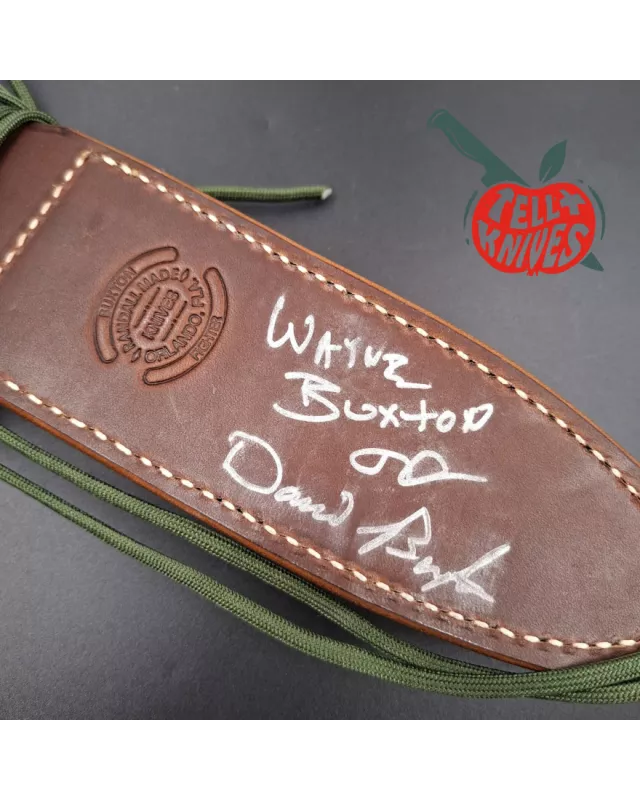
Its case is also worth a closer look. It bears the model’s specific markings, holds the whetstone, and, on this particular example, features the signatures of Wayne and David Buxton. These are details I find particularly endearing. They connect an object to people, to a legacy, to a story that goes beyond the number engraved on the blade.
The passing of Wayne Buxton in October 2026, unfortunately, gives these signatures a different resonance. It is with sadness that I reflect on the loss of this man, whose name will forever be associated with such a unique knife. For an enthusiast, these objects are also points of connection with those who conceived them, championed them, and brought them to the public’s attention.
The sheaths bearing his signature now form a collection that can no longer be expanded with new pieces signed by his own hand. I therefore expect them to attract greater interest among collectors and, likely, for the corresponding sets to increase in value over time. Exact price trends will depend on market forces, but their personal and historical significance has undeniably increased.
This adds to the appeal of a model that is already rare and relatively unknown outside the circle of Randall enthusiasts. It’s a paradox I really like about the Buxton: you rarely come across it, but once you know it, you recognize it immediately. It has its own silhouette, its own construction, and a presence that sets it apart from the rest of the line.
In fact, I have a confession to make: I already own one, with a brown Micarta handle, almost identical to the BF-1187 featured here. It’s safely tucked away in my personal collection, and I have no intention of taking it out. To tell the truth, I’ve even planned to be buried with this knife by my side. Too bad for my sons—they’ll inherit the others!
So you’ll understand that my enthusiasm goes beyond that of a collector happy to showcase a beautiful piece. This model has also found its place in my own collection, and clearly, it intends to stay there.
I love its rarity. And its history, too. Yet even setting those considerations aside, I’d still come to the same conclusion: the grip is superb, the balance is fantastic, and the design works down to the finest details.
For me, it’s a total success.
So, just one Randall? That would be a painful question for the collector that I am. But when it comes time to choose the one I’d keep, the Buxton Fighter would have a very good chance of winning out… And I think it knows it.